Monday, October 24, 2016

Time Management and Autism

Welcome  to AuSumness.

We are always on the look out for all of the awesome we find in Autism.  Sometimes we have to find strategies to make that search a bit easier.  That's what we're up to again, today.  Let us share a few helpful tips with time management.

As you may have discovered, it can be very difficult to get the kids ready on time.  Both of my boys have zero sense of urgency and must continuously be assisted with preparing for departure in a timely manner.

In a previous blog we mentioned timers and how they can help with tasks.  I often use a timer throughout the day so they could see through example, how it works.  I chose the timer on my stove because my youngest would pick up a small one and chuck it across the room if he didn't want the stress from having this kind of limitation.  Keep that in the back of your mind when trying a timer.
Have them help set the timer and perhaps start off using the timer for fun things.


A visual chart might help with time management and getting tasks finished in a timely manner as well.

Keeping routine is also very helpful with completing jobs and meeting deadlines or time lines.

If you are struggling with time constraints and keeping your children, family, students or friends on task, try to figure out exactly what it is that is stealing that time.

As you may have figured out, distractions can be the biggest problem you face when getting ready or finishing something on time.  If possible, create an environment with as little distraction as possible.  Keeping toys, games, art supplies and other fun things out of sight could assist you greatly.

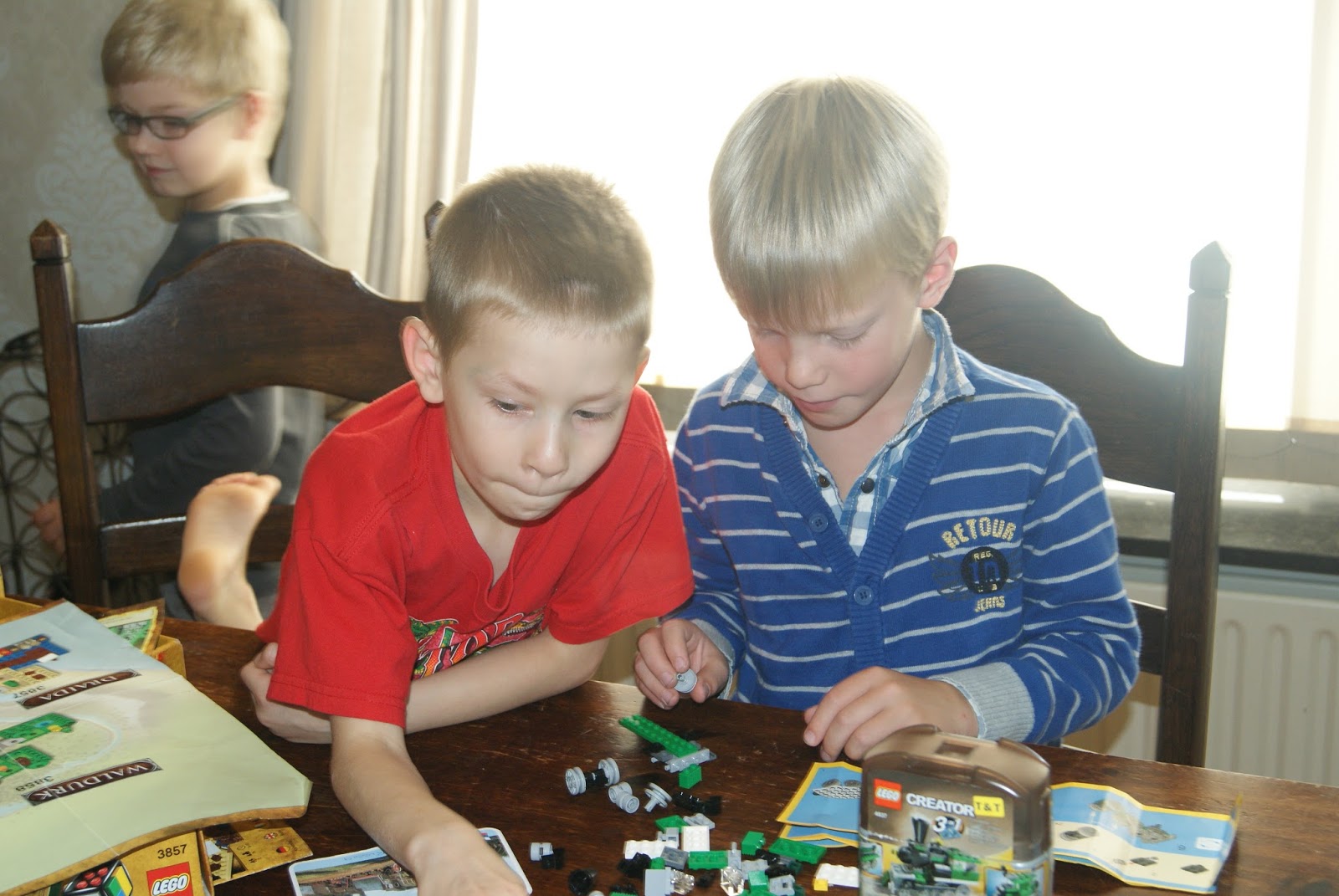
Look at my oldest up there!  He's all ready for school and fast, now that we've said, if you eat your breakfast and get ready fast enough, you can play games before we leave.  They all ready know, there are no games before 8 am and we have to leave at 8:20, so they could have up to 20 minutes of game time.  This has worked so, so super for us.

A visual chart might also help you with the morning routine.  Here are some previous posts where charts were our focus.  Check them out and download, for free, the ones that might help you most.


Click on the image to get this chart along with some other helpful tools.
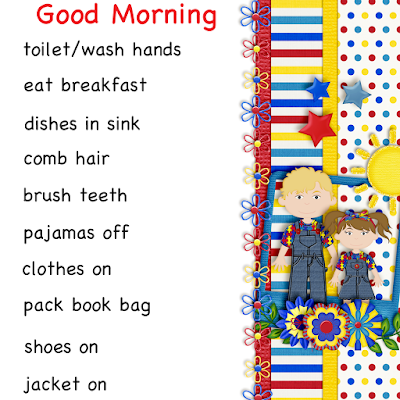
 morning tasks chart

Here's another idea for you try to and get your kids motivated.  Above each chart is a nifty gift for them to work for.  I have to use small ones for my youngest because he would get totally overwhelmed with a lot of boxes on his chart.  The boys often can work together for bigger things, too.  I always use things they like on my charts or make them exciting to look at.
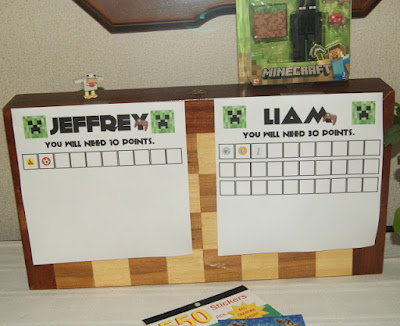
 chore charts

Every weekend, my boys have to do chores and they are not allowed "Game Time" until they are ALL finished. I'm still amazed at what I can get these boys to do, thanks to games.

 chore chart

Whatever you do, make sure you give chores and other responsibilities, no matter how small or simple it may seem.  The younger the better. People can really feel accomplished or responsible when they complete tasks and it's a very important lesson to learn.  Besides, you probably already have a lot on your hands and it surly doesn't hurt having a few more hands helping around the classroom or in the house.

We hope these tips and visuals will help make getting ready and finishing tasks easier.  If you've got  more helpful information and or tips that work for you, please share them in the comments or join us in our group on Facebook.

Best of luck!


Monday, October 17, 2016

How Autism Affects The Family

Welcome to AuSumness!

Today's entry is a bit different.  Perhaps me venting a touch and hoping you can relate with some of these daily struggles that are really frustrating.  Get an idea of what it's like to LIVE with Autism, not just sit a couple of hours or minutes at a party or grocer.

Why is it that everyone wants to play down Autism?  "Oh, it isn't that bad, right?"  "He looks normal."  After a dinner party, "He was great.  See, I didn't even notice there was anything wrong with him."  How often do you hear these lines?  Everyone throwing in their two cents.

I do not understand the value of down playing someone's misfortunes, no matter what the situation is.

The things most people do not notice is the parents constant attention they are giving their child during that dinner or family get together.  No one seems to notice how many times Aunt Sissy got up to tend to the children and how little of her food was actually eaten.  Who sees the physical strain, the bags under their eyes?


The economical expense of having a child or even multiple children with Autism is rarely considered by most.  The therapy and doctor's visits take a huge portion of income.  Many parents lose hours of work to take their children around to various appointments or stay home because the child is often ill.  My youngest, has PICA.  He eats everything.  Though, things are better, when he was younger he was always sick from eating nonfoods, continuously.  Many families suffer financial grievances of great proportions and it never ends.  More than likely, it will be for life.  It is estimated that the cost of treatment starts at 1.4 million dollars to 2.4 million for a lifetime of treatment.  In our home, we must continually repaint, re-wallpaper, patch holes, replace broken furniture and other fixtures as well. Well above the normal upkeep.


Try to imagine, the stress parents and siblings face on a day to day basis.  Since the diagnosis of both of our children, we have all suffered mentally and therefor, physically.  My husband, though a marathon runner, suffered two heart attacks.  I have Acute Anxiety Disorder amongst other ailments that commonly occur due to stress. The impact is much greater than I ever would have thought. 

So while families with Autistic kids are still doing the everyday grind, like everyone else, you have to add all of these other factors on top of it all. 

There is often a great feeling of despair for families and parents of Autistic children.  Especially knowing there is no cure and they don't grow out of it. Parents may feel guilty because of the situation their child is in.  The future is so uncertain for most and that is also a great strain.  Many parents refuse to go in public due to behaviour that might offend or they simply do not wish to see the judgemental glares that just add fuel to the fire.


So, do someone a favour by not minimising their situation, no matter the situation.  This can also go for life in general.  Everyone has their own crap going on.  We can all be more compassionate.

Encourage through smiling, hugging and reminding people that they are doing a great job.  Let them know that you can't imagine how difficult it must be, but that you are there to help if they need it.  

Real enlightenment comes when we truly walk in someone's shoes.  When we put our perspectives aside and make the effort to see things how someone else does. This should lead us to more compassion, understanding and less judgment.

These ramblings are never meant as some kind of boo hoo pity party.  They are tips and tools to help others understand how it really is living with Autism and suggestions on how to interact when in a situation involving Autistic children or parents and family thereof.

Perhaps you'll want to share this blog with someone who just doesn't get it.  

If you've got something positive you'd like to add, leave a comment or join us in friendly chatter in our Facebook Group.

Best of luck and we'll see ya next week.


Monday, October 10, 2016

Tics, Stimming and Autism

Welcome to AuSumness.

Like many of our other entries, I've gathered a wealth of helpful information and rounded it all up into one easy to read and hopefully, helpful blog.  It is rare to find useful information that we can apply to our daily struggles with Autism and that's why we started this blog.

Today, we're looking at tics and stimming.  We'll learn the difference between the two, why they occur and give a few solutions as well as put your mind at ease.  Yes!  I really think we can do that, too.


Stimming is a self stimulatory behaviour.  Some examples of stimming are flapping of the hands and or arms, rocking back and forth, spinning and using words repetitiously.

Tics are semi-voluntary.  They are a voluntary response to an involuntary sensation.  More than 20% of those diagnosed with Autism have motor and vocal tics.  These are not the same as compulsions, habits or stereotypics.  A tic disorder is typically genetic and neurodevelopmental.  They are often tied more to males than females.  It could be linked to a chemical imbalance in the brain and from what we have observed, it certainly is tied to anxiety and overstimulation as is stimming.

We deal with both stimming and tics periodically with our two Autistic children.  My youngest is a flapper, clapper and a jumper.  While my oldest has tics.  He plays repeatedly with his hair, flairs his nostrils, repeatedly smells his fingers, shrugs his shoulders and moves his head from chest to back.  Sometimes he does all of these at one time and to the point of physical exhaustion. Both stimming and tics in our case stems from anxiety, overstimulation and stress.  It often comes in phases.  We've learned how to deal with both, so we don't get stressed when tics and stimming come into play.

In the article I was reading the information given from Dr. Zimmer,  it was explained simply as, URGE-TIC-RELIEF and was recommended to wax and wane, which totally worked for us.  In most cases people do not even realise they are doing these things.  Our child was oblivious to the fact, until we kept pointing it out. 

Knowing that stimming and tics is a form of release from mental stress, we often let it go, unsaid, but just how far should you let it go?  When it becomes uncontrollable, excessive or painful, inappropriate or socially unacceptable, the behaviour needs to stop.

Some tips to stop or prevent tics and stimming:

fiddle toys (see another blog entry about these)
subtle reminders
physical assistance
joining in
stress relief
diagnosis
exercise and meditation

Fiddle toys work great in class.  If tests stress your kids or students, fiddle toys are quiet and won't disturb others.  Fiddle toys are a physical way to help relieve metal stress and anxiety.  They often can help with focus as well.

Our subtle reminders to our oldest about his repetitive tics was often enough to make him stop. Of course, we had to also observe when he was doing this and diagnose the problem.  During school, endlessly and right when he got home is when the tics were at their worst.  (A new school, changed all that.  We have not seen tics in months.  Yay!)  It was obvious, that school was giving him stress and anxiety.

My youngest's stimming doesn't bother us at all.  However, when in public it may attract quite some unfavourable attention.  We could care less for the most part.  (See our previous entry on humility and how it can change everything.)  There are occasions when stimming is not appropriate and then we simply place a hand on his shoulder or drawn him in to sit on our lap or give a hug and it typically stops.

Often, we join in on stimming because it draws the action to the behaviour making our son aware that he's doing it, without having to say anything and then he stops without further thought.  He often enjoys this as well.  Have you ever flapped and jumped or sometimes screamed along with your children?  It feels great and really is a form of release.  Unless it is excessive, inappropriate, physically harmful, dangerous or socially unacceptable, I'd let them have at it.  Hehehe...

Find out why this behaviour is occurring and take action.

Consider exercise and meditation as another means to help alleviate anxiety and stress.

We're not medical professionals.  Take all of this with a grain of salt. Our mission is to help and inform.  Use what information you can and the best of luck.

Thanks so much for checking us out.

(I did find some helpful information at AutismDigest.com)

Monday, October 3, 2016

A Dose of Humility For Helping With Autism and Social Situations

Welcome To AuSumness.

We had an AuSum response to our blog on socialising.  Thanks so much if you were a part of that!  We totally understand the importance of socialising and the great challenges it brings to our loved ones on the spectrum of Autism.

So we're back with more helpful tips on how to deal with social situations and or going out in public with people who may act in a way that is undesirable for others.  I remember when I was young, I would often give a frantic mother a hairy eye when their child was misbehaving.  How terrible of me?  I had no idea what the situation was.  It was judgemental, not thoughtful and down right rude of me.

I don't know about you, but when our boys were very young, we tried our best to not go out mainly for fear of outwardly distracting behaviour that many people would consider, not normal.  It really is a double edged sword though, isn't it?  By not going out, how are we to try and teach our children how they should or should not behave when in pubic?

A good dose of humility is the what we would prescribe for this.  Allow me to try and explain how humility will help make your life more enjoyable for you and those around you.

I would dare to guess that many of you have had to deal with flat out embarrassing situations when in public.  For example and hopefully, give you a laugh or at least an "I hear ya!", I was walking with my son behind a friend from school and his mother when my son shouts, "Wow!  Sander's mom is really fat!"  Could I have turned a darker shade of red?!  Or the time my son picked up a can of beer that was laying on the side walk and began to drink.  Then there are the meltdowns in the nice, quiet restaurants.


Often, social visits lead to some kind of irregular behaviour.  The best way to deal with these  situations is through humility.  Let's talk about some qualities of humility and how when used they are totally to our and other's advantage for when we show humility we can even control an uneasy environment.

Embrace who you are and how your children, students, family or friends are.  This has to do with authentically portraying who you really are and not try to disguise flaws.  Be genuine, polite, sincere and calm when you are with your kids in public and there will be nothing for people to have to read through.  They will see you exactly for who you are, a parent who's trying to do their best, given the circumstances.

By making eye contact with those around you and smiling warmly, you not only acknowledge their existence and perhaps annoyance, but you show them that you have considered them which makes you a nice person and should be treated as such.  You also show that you have it under control or perhaps will have it under control shortly.  Hehehe...

This next part is huge.  Read carefully...
You will experience less anxiety and stress by remaining genuine and openly dealing with unfavourable behaviour in public when using humility.

This will take a lot of self control and thought.

Praise or thank those around you for being understanding or at least tolerant and don't be ashamed to apologise if an apology is necessary.  This also takes a bit of humility to do.  It shows an excellent example as well.

It may be difficult, but try your best not to compare yourself with others for it will only bring feelings of envy and jealousy.  You may then, hold a grudge or become angry with someone who is displaying negative behaviour in your sticky situation.

Make light of the situation despite how heavy if may be for it will bring balance and eventually calm.  It will show those around you, that you've got this.

We can influence people positively through our own humility which actually is just being true to ourselves.  How refreshing is that?

Humility has saved our family so much stress and turmoil and we are all a lot happier because of it.

Humility can help everyone live a better life.  Give humility a try for you, your family and those around you.

Consider joining our group on Facebook.  We share our stories and help and support each other.

Thanks so much for stopping by.

Monday, September 19, 2016

The Bright Side Of Autism

Welcome to AuSumness.

Our last entry on Autism was shared, liked and we received a lot of comments on our other social networks.  We love to see participation, compassion and so many folks looking for support, advice and or help, just like us.

There is an overwhelming amount of information out there and after years of our own, personal research and professional help, it's not all very helpful.  When we find something really good, we'll share it here with you.

The Atlantic posted, "Autistic Brains Have Distinct Advantages".  It's a really good look at different ways to view Autism. Many of us parents and teachers of Autistic children, feel that there is something special about our kids.  Not just in a loving parental way, but also objectively.  

We want you to look at your children with fresh eyes.  Look for the wonderful or even extraordinary things they are doing and start thinking of ways to utilise those talents.  It might take a while and it may not be obvious, but never stop looking.

Liam was so unique the moment he left the womb.  They put him on my chest and he raised himself up to look me in the face. I was worried that I didn't hear crying.  It was amazing.  He never slept as a baby and still needs very little sleep.  He rarely goes to the toilet and he needs the minimal amount of food.  In the beginning we found this alarming, but after several years we began to think how this could be advantageous rather than thinking of it as something bad.

Liam was able to do complex puzzles quickly before he could even stand on his own.

As the article states, "low functioning" autistic people can also be smarter in certain ways than neurotypical people.  We definitely see that in our youngest son, JJ.  He's low functioning and needs help with just about everything, even at the age of 9.

However, before he started showing signs of Autism, he was doing very extraordinary things.  I've always played classical music for the boys.  Especially, when they were still in the womb and to this day, JJ has an absolutely amazing and unexplainable relation with music.  He seems to be able to pick up on the pattern of music before the song or piece is even complete and half way through the song, he can finish it without ever having heard the song before.


JJ was non verbal until 5 and he still has serious problems with communication, but he was humming Mozart at one year old.  Today, he sings some songs that he hears in the car and his timing is just perfect.  I was listening to a funky, downtown kind of song with an over use of the "F" word, which he seemed to really like.  Hehehe...He understood the rhythm and timing before the song was over and we both never heard the song before.

Also mentioned in The Atlantic is how some unique skills from autistic people can be overlooked or deemed not useful.  We couldn't agree more with this and we feel that even many professionals are not grasping these gifts and directing it into something useful.  That's what we really want and need to change.

JJ is obsessed with Minecraft.  He turned a Jenga game into noticeable Minecraft figures.

Are your autistic friends or family good with math and puzzles?  Many autistic folks are great with finding patterns or making awesome connections that others cannot figure out, but that doesn't mean it doesn't exist.  We all know about the falling tree in the woods.  We certainly need to change the way we think and then we will better our understanding of our children, family and friends with autism.

The Atlantic says that researchers are finding more evidence of profoundly disabled autistics that have incredible abilities that could be put to use if we could just get the right piece in the puzzle.  Just like The Atlantic mentions, autistic people being able to remember that January 13th was on a Tuesday, JJ can do that, too.  He also knows the birthday of everyone in his school and that's well over 100.

Yet what is his school or we, for that matter, doing about it?  What are all of these professional therapists doing to encourage, motivate or even improve these kinds of abilities?  Let's find uses for amazing abilities and let's also show others that this might just be another step in human evolution.  Perhaps finding a cure isn't all we need to focus on.  How about we focus on the utilisation of these unfathomable talents and give these people meaning, purpose and acceptance through continuous support and education so that people on the spectrum can become an integral part of our communities.

We seem very focused on erasing the differences between autistics and non autistics rather than harnessing the differences and working with the strengths.  Let's face it.  The social inability, if you will, to keep people feeling comfortable is a huge hang up of autism, but if we think more critically, is correcting this more important than improvement of their talents?  After all, how many people do you know that ask if you're ok even though they really don't care?  Aren't many comments your autistic friends and family make, things you're thinking anyway?  I don't know about you, but I like getting right to the chase.  I like it real and in my face rather than lied to and hidden behind a fake smile.  I find it refreshing and often hilarious and shake my head at the realisation that many people just don't like different.

Use a different perspective with your friends, family and students with autism and you will surly find something amazing.

Thanks for stopping by AuSumness.

Here are a few other entries that may interest you:

http://au-sumness.blogspot.be/2016/07/tips-for-getting-your-autistic-kids-to.html

http://au-sumness.blogspot.be/2016/04/autism-and-hair-cut.html

http://au-sumness.blogspot.be/2016/03/tools-to-help-those-with-autism-and-adhd.html


Monday, September 12, 2016

How A Timer Can Help Your Autistic Children

Welcome to AuSumness.

We're back with a few suggestions.  Here are some skills that we have learned ourselves and implemented in our home.  Tips that really work well.  We'll start off with just one.  They are unbelievably easy to implement.

Lately, I've been getting referrals from friends who have friends that recently received Autism diagnosis for their children.  Our boys are 9 and 11 and are at very differing places on the spectrum.  Of course, each person is different and these are just suggestions because they work for us and may work for you, too.


One of the many issues you may have is power struggles and constant bickering.  A way we have learned to combat this dialog is through the use of a timer.  It has been one of our biggest stress relievers. Both of our boys did not like being told when to stop doing something whether it was video games or a bath.  We realised that by NOT saying anything, the problem was solved.  It was that easy.

Currently, we are using the audio timer on our stove.  We set it for, let's say an hour to play on the Wii.  When they hear the beeping, they automatically stop.  We don't have to say a word and it is very, very rare that they keep playing.  I'm also more inclined to use the stove's timer than something physical that they can hold, because my youngest may just throw it across the room if he feels the time was not enough.


They can also check the timer to see how much time is left.  Both boys seem to respond very well to knowing exactly, even to the minute, how much time they still have.  Even if it is for a chore or studying.  That concrete, numeric meter seems to be just what they need.

Also, letting them know when time is nearly up can make the transition even easier still.  For example, in the evenings, we let the boys play on their tablets in bed for 30 minutes or so, before reading time.  (You could also increase or decrease this time as a means of reward or punishment.  I know that punishment should fit the crime, but this is one of the only things that work for us when it comes to consequences.)  We give a verbal warning that they have 5 more minutes, they hear the beep and there is no discussion.  


That's it!  Easy, right?  I plan on getting a portable kitchen timer for times when they can't hear the beeping from the kitchen.  If you have an hour glass or other type of time meter, you can try that, too.

Also, stick to your guns.  Beep and that's it.  If you don't stick with it and make it as black and white as possible, it may not work as effectively if at all.  I don't know about your kids, but my kids need black and white and if we are honest with ourselves we'll find the sense in that.

Here is a link explaining the benefits of visual timers.

At home, I don't want to stress my kids with the visual timers.  I know that my youngest uses it at school and is not a fan.  We've learned the importance of patience and time or how long it takes to do something, is not as important at finishing.  We've talked about choosing your battles.  This may be the greatest tip to learn.  Not only when dealing with Autism, but for life, in general.

Thanks so much for checking out The Cherry.  You can visit our Pinterest board, Autism to find all of our entries as well as other resources that may help you.


Monday, September 5, 2016

Autism and Socialising

Welcome to AuSumness.

We are finally back from a very long vacation and are ready to share some more tips to help readers cope with the symptoms of Autism as well as help others understand what it's all about.

A few days ago, some friend's of my oldest son came by, unannounced.  I was listening with half an ear from around the corner while working in the yard.  There was not a lot of conversation going on, so I joined in to see if I could help move things along.


Here is the assessment of the situation:

My son was in the middle of a game on his tablet.  His friends had come without warning and neither party knew how to address the situation that had arisen.

Like many people who have Autism, socialising is a challenge if at all possible for my boys. I could go on for days explaining our experiences with this, but will stick with the situation at hand.  My son barely took his eyes off of his tablet, he had no idea what to say to his unexpected visitor and had no regard to the discomfort of his guest.

From my son's friend came incomprehension at my son's behaviour, which tore at my heart a bit because we understand the importance of socialising, his friend's rarely come around any more since he moved schools and I really want to encourage them to visit more often.


Here are some tips that might help you with the same situation from both stand points.

From the visitor:

Alert your Autistic friend of your visit before hand, if possible and for the most productive result.  Also be aware of the often very literal comprehension of many people with Autism.  Meaning, if you say you are going to be there at noon.  Then be there at noon.  More minute later or even earlier can cause problems.

If you do come unannounced, wait until your friend has finished whatever he or she may be busy with before attempting conversation so that they really are listening.

Make sure that your visit is ok with them if you come without warning, by directly asking.  What one may consider being rude or blunt is actually the only or at least the best way for some Autistic people to even comprehend.  Plainly state the reason for your visit for the best result.

Give your friend time to take in your presence.  It may take a while and it would not be considered rude to ask them if they need this time or more time to get used to that fact that you are indeed, standing in their house wanting to communicate with them.  It may sound odd to some, but it is just what some people need.

Before leaving, ask if it is ok that you come unannounced in the future.


For the host:

Stop doing what you are doing when someone visits or at least ask them into your house and request that they wait until you can properly pay attention to them or ask if they could come back at another time and be sure to set up that time.

If the the guest has not plainly stated their reason for the visit, plainly ask.  Be aware that many people stop by just because they like you and they may want to talk or play because they like your company.

As a parent, I don't want to jump in for everything.  These are important life lessons, however.  If your children, friends or family do not have these skills or perhaps the ability to initiate socialisation then there may not be a choice.  Jump in and assist where necessary so that socialisation is encouraged because it really is necessary.

I asked that my son stopped playing his game and that he should listen to his friend. I know he likes this friend and I'm certain he had not thought of the consequences of ignoring his friend reaching out. It would be a different story if my son really didn't want this guy around.  Keep that in mind.  I certainly wouldn't force my children to accept guests that they do not want there.

**The next step was to figure out why his guest was there.  His friend probably thought it was obvious because he was holding his phone and talking about Pokemon, but my son didn't pick up on those social cues.  I pointed out those two facts and the lights came on with a bit of time.

The last thing you want to do is arrange another time for a meeting or at least request that they give a heads up before their next visit.  You may feel it necessary to explain some of the tips mentioned, like speaking plainly and giving time for the new adjustment or change by their visit.

Here is my FB group.  I'd love to have you join us there!

I hope this has helped.  

Feel free to see our other posts.  Our most popular so far are:

http://au-sumness.blogspot.be/2016/04/autism-and-hair-cut.html

http://au-sumness.blogspot.be/2016/07/tips-for-getting-your-autistic-kids-to.html

http://au-sumness.blogspot.be/2016/06/10-alternatives-to-tying-shoelaces.html

http://au-sumness.blogspot.be/2016/05/autism-and-pets.html

http://au-sumness.blogspot.be/2016/05/tips-for-feeding-sensory-disordered-and.html

Thanks so much for stopping by and best of luck!